Showing posts with label TBR Reading Challenge. Show all posts

Wednesday, June 4, 2008

Thursday, May 29, 2008

Review Roundup


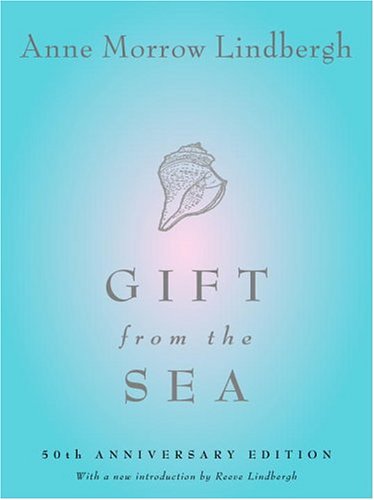
Gift From the Sea by Anne Morrow Lindbergh (1955, 132 pgs.): What amazes me about this little collection of the author's musings on womanhood and relationships is how things have really not changed that much in over 50 years. I personally find great comfort when I find someone whose thoughts mirror my own, and obviously there are many others who feel the same way, as this book continues to be popular. My one complaint is that I felt that the comparisons between different stages of a woman's life and the various sea shells was too forced. I would have enjoyed the book more without this structure.


Twelfth Night by William Shakespeare (1601): Shakespeare for me is more of a game or puzzle than a traditional literary experience. For me trying to make sense of the words in a Shakespearian play fills that same need that drives others to do crossword puzzles or Sudoku. The plays that I have read recently I have read on Barnes and Noble's "No Fear Shakespeare," where they have the original text on one side, and a "translation" of sorts into modern language on the other side. I like to puzzle over the original and figure out what it means, and then check to see how close I am. Sometimes I'm right on target, and other times I have made up something completely off the wall. I read Twelfth Night because my daughter's third grade class is performing a version of this in June, and I wanted to be fully prepped for the experience! This one is a comedy filled with unrequited love, mistaken identities, and gender mix-ups. Orsino is in love with Olivia, Olivia is in love with Cesario (who is really Viola dressed up as a man), Viola is in love with Orsino, who thinks she is really a man, and ambitious Malvolio, Olivia's head servant, is tricked in to believing that Olivia is in love with him. Throw in a witty fool, a drunk uncle, and of course, Viola's twin brother who she presumes is dead, and you've got quite the soap opera. It was not one of my favorites, however (out of the mere 6 that I have read!). I'm guessing I will enjoy my daughter's performance better!


Shake Down the Stars by Frances Donnelly (1988, 642 pgs.): This out of print book was loaned to me by a friend who found it in a common room while she was in Alaska over ten years ago, and she fell in love with it and lent it to me to read. It follows the story of three very different young women who come from the same village in England, and how the war affects their lives. One girl I liked, one I wanted to shake her and tell her how stupid she was being, and the other I wanted to shoot. And yet I found myself attached to all of them, and I loved to see their imperfections along with their strengths. There are some interesting love scenes thrown in (to me they seemed like a man wrote them, and one of them made me laugh), and the characters don't exactly live a life of purity. There are some references to abortion, as well as one abortion scene that I personally found very disturbing, but I think that was the author's intention. The book was almost as much about feminism as it was about romance. But, to be honest, the romance was the part that I liked. I'm wondering if there is anyone else out there who has read this? I don't know how popular it was when it came out.


Bridesmaids Revisited by Dorothy Cannell (2001, 256 pgs.): I was excited "revisit" the Ellie Haskell mystery series, having loved Wuthering Heights and The Thin Woman, but I was disappointed in this one. Ellie receives a letter from the "bridesmaids," three friends of her grandmother, telling her that her grandmother has a message for her. The problem is, as you've probably guessed already, her grandmother has been dead for a while. As usual, this story involves uncovering family secrets, eccentric characters, and humorous allusions to Gothic mysteries. It just wasn't up to par with the other two I had read.


Femmes Fatal by Dorothy Cannell (1994, 304 pgs.): Another Ellie Haskell mystery (I was in the mood for fluffy reading!). This was like "Desperate Housewives meets The Carol Burnett Show." Ellie feels like her marriage is lacking in passion since she had twins, and so she joins Fully Female, a club that promises to help a woman "fulfill her physical, emotional, and sexual potential." (It sounds racy, but it isn't really.) After not too long, people start dying, and it's up to Ellie to find the culprit. I had a few laughs, and it was an entertaining diversion, but it wasn't as good as others in the series.


A Wind in the Door by Madeliene L'Engle (1973, 209 pgs.): This is a companion to A Wrinkle in Time (one of my favorites) that I have had on my bookshelf for a while, and I kind of wished I had just left it there. Reading this made me understand people who have a distaste for fantasy. It was just way too fantastical for me. Like a drug trip or something. I appreciated the themes she was trying to convey, but not the story she used to convey them.


Veil of Roses by Laura Fitzgerald (2006, 320 pgs.): If you're looking for a great feel-good chick flick in book form, this is it. Iranian Tamila has three months in America to find a husband or she has to return to her restricted life in Iran. One prospect for her is a man who is an obsessive germ freak who insists she have a full medical exam before he will marry her, and another is gay, just trying to make his mother happy. During this husband-choosing process, Tami meets Ike, the blue-eyed dreamboat who works at Starbucks. She also becomes friends with her fellow students in the English learning class, including an pregnant, abused, mail order wife from Russia, and a "colorful" (especially in her language) soldiers wife from Germany. Through the story, Tami seems to be finding her own voice that she has never had the freedom to express. I laughed, I cried, it moved me.

Wednesday, April 23, 2008

Austenland by Shannon Hale (2007, 197 pgs.)

This seems like the perfect book for a relaxing day at the beach (that is if your trips to the beach are the relaxing sort, which hasn't been the case for me for almost 15 years.) Or maybe the book you take on vacation when you want something lighthearted and fun. Or, if you are miserably confined to your bed for the day with a sore back, and you need something to cheer you up a bit. I have never had back trouble until this past weekend, and I was so glad to have Austenland available to take my mind off my misery.

It begins with a dedication in which Hale's target audience is identified:


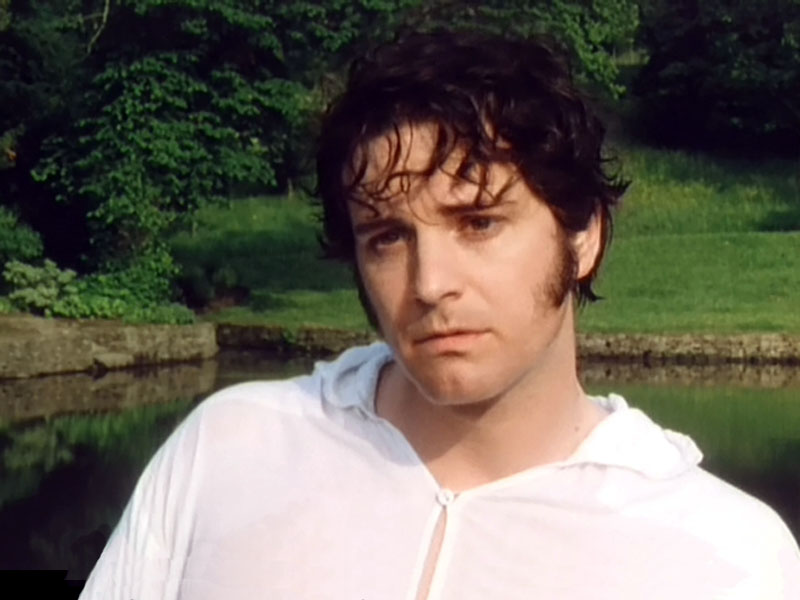
For Colin Firth*
You're a really great guy, but I'm married, so I think we should just be friends.

Pride and Prejudice-obsessed Jane Hayes has failed to find a boyfriend that lives up to the standard that Mr. Darcy has set. So when she is given an all-expense paid trip to Austenland, an English resort where Austen's world comes to life, she decides the trip will help her get all of her fantasies out of her system before finally giving up on men.
As Jane gradually gets the hang of playing the part of a Regency lady, the difference between what is real and what is not blurs as she tries to make sense of what she really wants.
The book is quick and witty, but not as good as the two others by her that I've read--Goose Girl and Princess Academy. But since they are completely different genres, it's not really a fair comparison. As far as Austenland goes, you get that cozy chick flick feeling from a book in not much more time than it takes to watch a movie.

Rating: 3.5 Stars

*Colin never looks quite as good in subsequent movies as he does in Pride and Prejudice--believe me, I've done my research!

Monday, April 21, 2008

A Tree Grows in Brooklyn by Betty Smith (1943, 420 pgs.)

It seems the more I love a book, the less I want to write about it! I just want to say, "Read it! It's so good!" It doesn't help matters that I can't really pinpoint what it is that makes this novel so richly satisfying. Everything Smith writes is honest and moving, as she paints a picture of the life of an Irish-American family living in poverty in Brooklyn in the 1910's.

And that's really all I'm going to write.

Oh, and I should say that this was a book club selection, and everyone who read it loved it also.

Monday, March 31, 2008

Catching up on Some Reviews!


I don't call myself "Chain Reader" for nothing! As soon as one book is done, I'm grabbing for another. That's one of the reasons I started this blog--it makes me at least stop and think about the book I have just finished so they don't all just blur into one another. But I don't always have the self-discipline to keep myself from opening that perpetual "next" book until I've done a review. Anyways, this is just my discursive way of saying that I'm behind on reviewing the books I've read. So I will try to do a few nutshell reviews to catch up:

Cleaning: Plain and Simple by Donna Smallin (2006, 290 pgs.): I am convinced that this is some sign of reading sickness that I even read books about housework. I think I just get bored so easily, and if I can find some new method for doing laundry every few months, or learn some new homemade concoction for scrubbing the cabinets, cleaning could actually be a little bit fun! This one is actually one of the best I've read. It has some general advice, and then is divided up by room, and goes beyond the basics, including some natural cleaning options. There a many quotes scattered throughout the book, and I loved this one by Erma Bombeck: "My theory on housework is, if the item doesn't multiply, smell, catch fire, or block the refrigerator door, let it be. No one else cares. Why should you?" Amen to that!
Rating: 4.5/5

People of the Book by Geraldine Brooks (2008, 384 pgs.): Hanna Heath accepts the assignment to restore the mysterious Sarajevo Haggadah, an ancient Jewish manuscript with stunning and unlikely "illuminations." She discovers a few clues to its history: an insect wing, a wine stain, salt crystals, and a white hair. The book alternates between her scientific discoveries about the clues and the stories of the past keepers of the Haggadah. I enjoyed reading it and had a hard time putting it down, although the fact that some parts are told in reverse-chronological order gave me a bit of mental vertigo.
Rating: 4/5

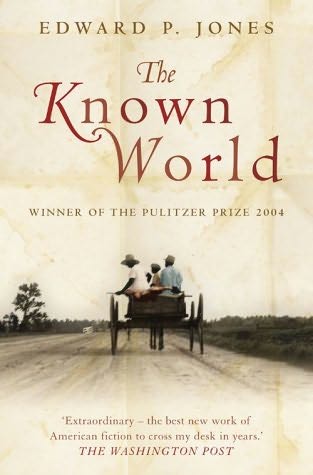
The Known World by Edward P. Jones (2003, 14 hrs. 13 min.): This was the Pulitzer Prize winner for 2004, and I've got to be honest, that's the only thing that kept me listening to the end. **CHEATER WARNING** Review from Amazon:
Set in Manchester County, Virginia, 20 years before the Civil War began, Edward P. Jones's debut novel, The Known World, is a masterpiece of overlapping plot lines, time shifts, and heartbreaking details of life under slavery. Caldonia Townsend is an educated black slaveowner, the widow of a well-loved young farmer named Henry, whose parents had bought their own freedom, and then freed their son, only to watch him buy himself a slave as soon as he had saved enough money. Although a fair and gentle master by the standards of the day, Henry Townsend had learned from former master about the proper distance to keep from one's property. After his death, his slaves wonder if Caldonia will free them. When she fails to do so, but instead breaches the code that keeps them separate from her, a little piece of Manchester County begins to unravel. Impossible to rush through, The Known World is a complex, beautifully written novel with a large cast of characters, rewarding the patient reader with unexpected connections, some reaching into the present day. --Regina Marler
The last sentence cracks me up. It's code for "boring and complicated, with too many characters to keep track of." I was patient, but didn't feel rewarded.
Rating: 3/5

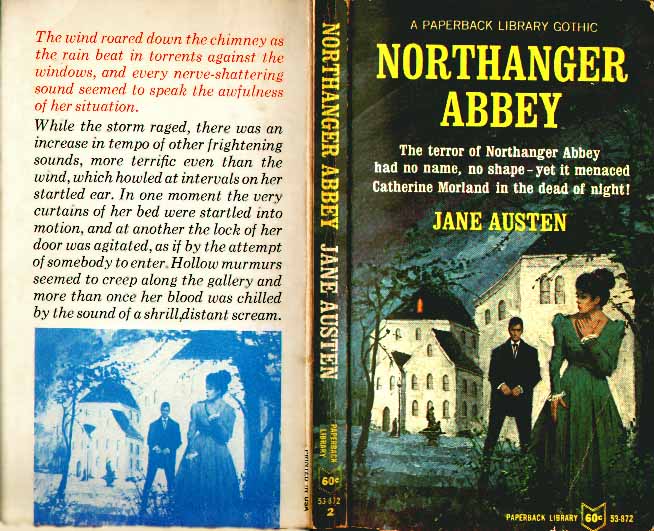
Northanger Abbey by Jane Austen (1798, 179 pgs.): This is the only Austen book I hadn't read, and the saying "save the best for last" does not apply here. Another expression that keeps popping into my head is "you can't win them all." Jane Austen is truly a genius, and in most of her works, her wit jumps out from every page, every sentence and every word. In Northanger Abbey, it just emerges every once in a while. I didn't hate it though--it is Jane Austen for heaven's sake! (Kind of like The Avengers is one of the lamest movies ever made, but Ralph Fiennes is in it, so I'll enjoy it anyway). Also, Catherine Morland reminded me so much of myself that it was scary--reads too much, bends her will to please others, and cries a lot.
I've watched about a third of the movie so far, and have learned that I have been pronouncing the title all wrong. It should be North-Anger--anger as in mad. But everyone likely knew that except for me.
Rating: 3.5/5

Uglies by Scott Westerfeld (2005, 448 pgs.): Here I can truly say that I have saved the best for last, (of my reviews, that is). I loved this one, showing that I will forever be a teenager at heart. Tally Youngblood lives in a world 300 or more years in the future, in which everyone is turned "pretty" at the age of 16 through a very thorough cosmetic operation. Tally learns of a small group of rebels who choose to live another way of life, rejecting the idea that everyone should be perfect. Fans of The Giver by Lois Lowry should love this one. My 13-year-old daughter loved it too and has read it twice, along with the rest in the series. (I should note that she was mortified that I wanted to read the same book as her. She couldn't find it for a couple of months, and I'm still not convinced that she didn't hide it on purpose.)
Rating: 5/5

Thank goodness I've gotten all of this off my chest and into the blogosphere. I can sleep without having nightmares about review-evasion agents coming to get me.

Thursday, March 13, 2008

The Painted Veil by W. Somerset Maugham (1925, 246 pgs.)

I was inspired to read this book after watching the movie, which I loved, so I thought I would post the movie trailer instead of making a my usual feeble attempt at summarizing the plot:


The book and movie were very similar except for the endings. The movie had a more hopeful, moving conclusion, while the book was probably a little more realistic. Either way, I love the story as well as the setting. It is also very readable and not too long. There were several passages that I loved, but I was reading this at Disneyland, and I didn't have a pencil to underline them. Oh, well. They're a part of me now, stored somewhere in my brain.

Monday, January 28, 2008

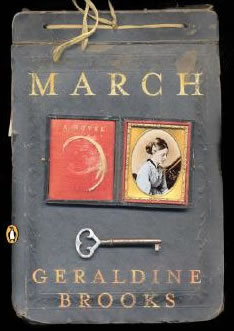
Audiobook: March by Geraldine Brooks (2005, 10 hrs. 22 min.)

In reading Little Women, I never really gave much thought to Mr. March and his experiences as a chaplain in the Civil War. (In fact, when I read it at a much younger age, I didn't even know it was during the Civil War!) This 2006 Pulitzer Prize winner gives us a chronicle of what his experiences might have been, and the realities of war that he does not write about in his letters home. A lot of his experiences are based on Louisa May Alcott's father, a transcendentalist who rubbed shoulders with Emerson and Thoreau. March encounters racism, both from Northerners and Southerners, and other cruelty that he struggles to take action against, but fails. We learn in flashbacks about his courtship with Marmee (and learn where Jo gets her temper from!) and why the family has become so poor.
The best word I can use to describe this "listen" is "interesting." It didn't grab me in any way, it was just "interesting" to see the different perspectives of various individuals and groups during the Civil War. I like to meet famous people in works of fiction and experience what a conversation with them would be like, and there are a few instances of this in this book. The books I love usually fit into one of two catergories--great storytelling or great writing. Occasionally a book fits into both. March didn't fit into either one for me, but I don't regret reading it, if that makes sense.

Tuesday, January 15, 2008

The Handmaid's Tale by Margaret Atwood

This is one of those books that I don't want to say much about because part of the joy of reading it is in the unfolding of the story. In general I can say that it is a portrayal of a woman named Offred who lives in the future, dystopian society of Gilead. The story is riveting (it helps that this is one of my favorite genres), and the writing is genius. I will throw you a few gems:

"I lie in bed, still trembling. You can wet the rim of a glass and run your finger around the rim and it will make a sound. This is what I feel like: this sound of glass. I feel like the word shatter. I want to be with someone."

"I know where I am, and who, and what day it is. These are the tests, and I am sane. Sanity is a valuable possession; I hoard it the way people once hoarded money. I save it, so I will have enough when the time comes."

Maybe the best description of the story can be given in this passage from Offred, the narrator:

"I wish this story were different. I wish it were more civilized. I wish it showed me in a better light, if not happier, then at least more active, less hesitant, less distracted by trivia. I wish it had more shape. I wish it were about love, or about sudden realizations important to one's life, or even about sunsets, birds, rainstorms, or snow. . .
I'm sorry there is so much pain in this story. I'm sorry it's in fragments, like a body caught in crossfire or pulled apart by force. But there is nothing I can do to change it."

Nothing needs to be changed about this story. I enjoyed every single page, even though it took me far beyond my usual PG-rated bubble. (It is included in the American Library Association's list of most challenged books of 1999, and is number 37 on the "100 Most Frequently Challenged Books of 1990-2000," due to parental disapproval of the content.) Nonetheless, I am anxious to read more of her writing.

Thursday, January 10, 2008

Dracula by Bram Stoker

Here is what I knew about Dracula before I read this book:
  • He has sharp teeth that he likes to suck blood out with
  • He can turn into a bat
  • He's from Transylvania
My only other exposure to vampires is the Twilight series, and I recall reading that Stephenie Meyer has never read Dracula--she didn't want to be influenced by it. I also remember when I was very young hearing about vampires, and I slept many nights with a pillow over my neck. And still, as an adult, I found myself grasping my neck a lot as I read this novel, and filled in the gaps (or emptiness, more appropriately) of the story.
It's very readable, which surprised me. The author is Irish, which also surprised me. I think I always imagined Bram Stoker as being Hungarian or something. The book consists of the journal entries and letters of the main characters, as they tell of their unfolding knowledge that their lives are being threatened by the evil of the "Un-dead." Here's a little bit about each one of the characters:
  • Jonathan Harker: Jonathan travels to Transylvania to assist Count Dracula in a real estate transaction--he is buying property in London, where he is going to move. He gradually realizes he is merely a prisoner in the castle, and his frightening experiences cause him to think he is mad, and he ends up in Budapest with brain fever.
  • Mina (Murray/Harker): Jonathan's fiance and eventual wife, who epitomizes the ideal Victorian woman. I almost got tired of the male characters' endless praise of her, and her constant comparison to an angel. She eventually becomes the target of Count Dracula, and much of the story involves the destruction of the vampire in order to save her soul (and prevent her from becoming a "voluptous fiend," like her not so fortunate friend . . .
  • Lucy Westenra: Lucky girl--she has three men asking for her hand in marriage. But, no time for jealousy, she is the first to fall victim to Dracula's lust for blood.
  • Mr. Renfield: A patient of Dr. Seward (one of Lucy's suitors) who likes to eat spiders and flies for their life force. His role in the narrative is in question until the end of the book, but he was one of my favorite characters--I thought he was more dimensional than the others.
  • Van Helsing: Dr. Seward's mentor, a well-renowned doctor who is open to ideas that others would dismiss, which helps in the case against the supernatural threat. He is the most knowledgeable about vampires, seeing what the others miss. I don't know if it was intentional by the author, but I found his character somewhat amusing. I think it was because his accent is portrayed only partially (he's Dutch), and he never says things plainly--he's very figurative. You would think that since they were often pressed for time, he would just be clear and specific.
One of the most interesting things about the story is that Dracula's plan seems to be to use the women to get to the men, thus overpowering everyone. It's like a parallel to the traditional story of Adam and Eve--Eve is tempted by Satan, and then tempts Adam to eat the forbidden fruit. It's filled with a lot of other Christian symbols, and a few things that I interpreted to be phallic symbols, but maybe I'm a little too much like Lucy--all too ready to fall prey to seduction!

One of my goals is to not make my posts too long--I've failed with this one. I will go on to say that I also watched the classic movie with Bela Legosi for the first time and found it very entertaining. I loved Renfield in it, the special effects and lighting were a hoot. It had the perfect level of horror for me--they didn't even show any contact between teeth and neck. You just knew it was happening, and that's usually enough for me. I managed to sleep with my pillow under my head last night--not over my neck!

The Talismans of Shannara by Terry Brooks

This is the seventh book in this high fantasy series that is centered around several objects of power that are needed to fight evil. If that sounds a bit like The Lord of the Rings, then you're on the right track--the two are very similar, although the Shannara series definitely has a more modern feel. This particular book brings all of the previous stories together, and the characters realize their quests, learn much about themselves and strengths they didn't know they had, and accept the burdens that their special gifts place upon them. I love the stories despite the fact that Brooks can be a bit wordy, and spend paragraphs on the same inner struggles repeatedly, but that's something I didn't really notice until the last couple of books. In the Harry Potter series, I got a little tired of reading about when someones face was green, red or white, and someday I'm going to count how many times Harry vomits--it's got to be like twenty or something. But I still LOVE Harry Potter, and I love the Shanarra series to0--it's a world you can escape to when this one gets overwhelming!


Tuesday, January 8, 2008

Audiobook: Snow Flower and the Secret Fan by Lisa See

This was a fascinating picture of life for women in China in the nineteenth century, as told by Lily when she is 80 years old reflecting back on her life. She lives in a world where women's feet determine their marriageability, relationships are contractual, women inhabit the "inner" sphere, while men dominate the outer, and where females are considered useless unless they bear sons. The main focus is her friendship with Snow Flower, and the secret fan on which they write the special women's language "nushu" (this may be spelled wrong, since I listened to rather than read the book.) As Lily goes through her life, she struggles with choosing between adhering to society's expectations of her or ignoring the many rules to maintain her friendship with Snow Flower, who has married into a family of lower social status. She also continually fails to accept Snow Flower for who she really is, with heartbreaking consequences. My review seems very inadequate, but let me assure you that the books is much better! It is very simply, but beautifully written. It also made me grateful to be living in this time and place. I have no desire to go through the painful process of having my feet bound so that they will resemble lilies and be admired by my husband. I'm sure he doesn't even know my shoe size!

Monday, December 31, 2007

Big Stone Gap by Adriana Trigiani

"This will be a good weekend for reading. I picked up a dozen of Vernie Crabtree's killer chocolate-chip cookies at the French Club bake sale yesterday. Those, a pot of coffee, and a good book are all I will need for the rainy weekend rolling in . . . The Wise County Bookmobile is one of the most beautiful sights in the world to me. When I see it lumbering down the mountain road like a tank . . . I flag it down like an old friend . . . I even love the smell of books."

I love it when I encounter a soul mate character in a book! Cookies, reading, rain (minus the coffee)--what a perfect combination!
This books was like a chick flick in book form. I could see it as a movie with every turn of the page. It's lighthearted and humorous, and it's one of those stories where you fall in love with the guy before she does, and you just want to smack her on the head and say, "Look at him! He's the one!" It took about 100 pages for me to start getting into it, but after that it was difficult to put down. A review from the back of the books says, "Adriana Trigiani writes with wit and grace about misguided romances and family secrets, and so very winningly about generous hearts. This urban Yankee reader found hours of bliss in Big Stone Gap, Virginia." Well, this southern California reader found a few hours of delight in this quirky Virginia town also.


The Memory Keeper's Daughter by Kim Edwards

I read this book for the "To Be Read Challenge" a little early, but I can always read another book to make up for it if I want to adhere to the challenge rules! I am sure that a lot of people are familiar with the premise of this book: in 1964, a doctor delivers his own twins, but gives one away without telling his wife when he discovers the baby has Down's Syndrome. The attending nurse is asked by the doctor to take the infant to a special home to be raised, but upon seeing the conditions of the facility, she decides to keep the baby and start a new life in another city. The doctor tells his wife that the baby died. And so the twins are raised apart--the boy with his father who closes himself off from everyone and his mother who never recovers from her grief and is constantly running away from it; and the girl with the nurse who fights for her right to an education and a fulfilling life. I loved the psychological aspect of the story, which is told without judgment. This allows you to see inside of each person, their motives and emotions, and just feel empathy for them. Like us, they all make bad choices, some worse than others, and they make their way through life trying to deal with them. The strongest impression (of many) that I was left with when I finished the book is that we cannot shield ourselves or others from pain, no matter how hard we try.
This is a great book for a book club because there is so much to discuss. So if you're looking for you next book, try this one! I also got a little more insight into the book reading an interview with Kim Edwards. She tells about what inspired the story and some background on society's attitudes towards Down's Syndrome children in the sixties.
Note: I would probably give this 4 1/2 stars rather than five, but I didn't make a graphic for that!