Author: George Eliot
Originally published: 1876
This edition published by: Modern Library (2002)
Introduction by: Edmund White
Length: 800 pagesThis edition published by: Modern Library (2002)
Introduction by: Edmund White
My Rating: 4.5/5
While George Eliot is one of my favorite authors, I have to admit that the first 250 pages of Daniel Deronda were rather like swimming against the current. A couple of things I enjoy about her writing are her in-depth characterizations and her digressions into topics that I personally obsess about, but even these aspects became tedious to me. There are some minor characters that the reader simply does not need to know so much about! Ironically, she makes this statement after introducing the enigmatic Grandcourt: "Attempts at description are stupid: who can all at once describe a human being?" Well, in my opinion, Eliot is pretty darn good at it, even though she goes a bit overboard in the beginning. However, once she has established the psychological framework of everyone under the sun, the story does pick up and the book gets hard to put down (despite its weight!)
Here is a brief summary a la back of the book:
Here is a brief summary a la back of the book:
George Eliot's final novel and her most ambitious work, Daniel Deronda contrasts the moral laxity of the British aristocracy with the dedicated fervor of Jewish nationalists. Crushed by a loveless marriage to the cruel and arrogant Grandcourt, Gwendolyn Harleth seeks salvation in the deeply spiritual and altruistic Daniel Deronda. But Deronda, profoundly affected by the discovery of his Jewish ancestry, is ultimately too committed to his own cultural awakening to save Gwendolyn from despair.
This brief description barely scratches the surface of what is to me a very deep and complex novel that I could not even begin to summarize myself. The biggest question I had while reading it was "Why isn't the book titled 'Gwendolyn' rather than 'Daniel Deronda?'" Even though Deronda goes through a major cultural and religious conversion, he is still very much the same person from beginning to end--a deeply empathetic man with a desire to be a savior to all in need. It is Gwendolyn who changes from a self-centered girl who "did not like to dwell on facts which threw an unfavorable light on herself" to a woman who must in the end face the ugliest aspects of her personality. I can't help but wonder if Eliot created this misnomer by design--after all, she herself changed her name many times throughout her life. Also interesting to note--Gwendoylyn is the only main character in the novel who goes by her given name (other than when she marries). All of the others have at some point in their lives taken on different names than those given at birth. If this was indeed intentional, what was she trying to convey? Perhaps that regardless of the names we choose to take upon ourselves, out identity is based on something more substantial than a name?
The most powerful theme of the novel (among many) is the fact of life that often our gain is another's loss, and when we help one person, we may be causing another to suffer. All of the major characters (except for the cruel but flat Grandcourt), grapple with this truth and attempt to come to terms with it. Deronda must admit that he can't save everyone, and Gwendolyn must accept that even is she is on the losing side, she is capable of picking up the pieces and making a life for herself.
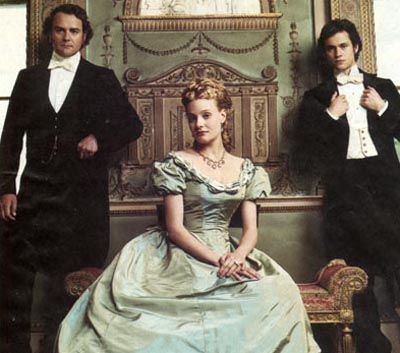
Really, I could go on and on with my thoughts on this novel. The plot may seem to get drowned a bit in the characterizations and the psychological musings. It also may have a touch of flowery romantic melodrama: "You are to me the chief woman in the world--the throned lady whose colours I carry between my heart and my armour." And certain elements of the plot are somewhat coincidental. But I still loved it; I am partial to George Eliot. This is the fifth novel of hers that I have read, Middlemarch being my favorite, with Adam Bede a close second. I know it's not for everyone, and if you don't feel up to perservering through 800 pages, watch the BBC movie. It's excellent. I haven't seen it for a few years, but I think it follows the plot fairly well. Luckily, I had forgotten the ending completely, so the book held a few surpises for me!
The most powerful theme of the novel (among many) is the fact of life that often our gain is another's loss, and when we help one person, we may be causing another to suffer. All of the major characters (except for the cruel but flat Grandcourt), grapple with this truth and attempt to come to terms with it. Deronda must admit that he can't save everyone, and Gwendolyn must accept that even is she is on the losing side, she is capable of picking up the pieces and making a life for herself.
Really, I could go on and on with my thoughts on this novel. The plot may seem to get drowned a bit in the characterizations and the psychological musings. It also may have a touch of flowery romantic melodrama: "You are to me the chief woman in the world--the throned lady whose colours I carry between my heart and my armour." And certain elements of the plot are somewhat coincidental. But I still loved it; I am partial to George Eliot. This is the fifth novel of hers that I have read, Middlemarch being my favorite, with Adam Bede a close second. I know it's not for everyone, and if you don't feel up to perservering through 800 pages, watch the BBC movie. It's excellent. I haven't seen it for a few years, but I think it follows the plot fairly well. Luckily, I had forgotten the ending completely, so the book held a few surpises for me!