Tuesday, October 7, 2008

Banned Books--Bring Them On!!


This is making the rounds in honor of Banned Books Week, which was earlier this month. Here's how it works:

If you have read the whole book, bold it. If you have read part of the book, italicize it. If you own it but haven't gotten around to reading it yet, *** it.


1.
The Bible
2. Huckleberry Finn by Mark Twain
3. Don Quixote by Miguel de Cervantes
4. The Koran
5. Arabian Nights
6. Tom Sawyer by Mark Twain
7. Gulliver's Travels by Jonathan Swift
8. Canterbury Tales by Geoffrey Chaucer
9. The Scarlet Letter by Nathaniel Hawthorne
10. Leaves of Grass by Walt Whitman
11. The Prince by Niccolò Machiavelli
12. Uncle Tom's Cabin by Harriet Beecher Stowe
13. Diary of a Young Girl by Anne Frank
14. Madame Bovary by Gustave Flaubert
15. Oliver Twist by Charles Dickens
16. Les Misérables by Victor Hugo
17. Dracula by Bram Stoker
18. Autobiography by Benjamin Franklin
19. Tom Jones by Henry Fielding
20. Essays by Michel de Montaigne
21. The Grapes of Wrath by John Steinbeck
22. History of the Decline and Fall of the Roman Empire by Edward Gibbon
23. Tess of the D'Urbervilles by Thomas Hardy
24. Origin of Species by Charles Darwin
25. Ulysses by James Joyce
26. Decameron by Giovanni Boccaccio
27. Animal Farm by George Orwell
28. Nineteen Eighty-Four by George Orwell
29. Candide by Voltaire
30. To Kill a Mockingbird by Harper Lee
31. Analects by Confucius
32. Dubliners by James Joyce
33. Of Mice and Men by John Steinbeck
34. Farewell to Arms by Ernest Hemingway
35. Red and the Black by Stendhal
36. Das Capital by Karl Marx
37. Flowers of Evil by Charles Baudelaire
38. Adventures of Sherlock Holmes by Sir Arthur Conan Doyle
39. Lady Chatterley's Lover by D. H. Lawrence
40. Brave New World by Aldous Huxley
41. Sister Carrie by Theodore Dreiser
42. Gone with the Wind by Margaret Mitchell
43. The Jungle by Upton Sinclair
44. All Quiet on the Western Front by Erich Maria Remarque
45. Communist Manifesto by Karl Marx
46. Lord of the Flies by William Golding
47. Diary by Samuel Pepys
48. The Sun Also Rises by Ernest Hemingway
49. Jude the Obscure by Thomas Hardy
50. Fahrenheit 451 by Ray Bradbury
51. Doctor Zhivago by Boris Pasternak
52. Critique of Pure Reason by Immanuel Kant
53. One Flew Over the Cuckoo's Nest by Ken Kesey
54. Praise of Folly by Desiderius Erasmus
55. Catch-22 by Joseph Heller
56. Autobiography of Malcolm X by Malcolm X
57. The Color Purple by Alice Walker
58. Catcher in the Rye by J. D. Salinger
59. Essay Concerning Human Understanding by John Locke
60. Bluest Eye by Toni Morrison
61. Moll Flanders by Daniel Defoe
62. One Day in the Life of Ivan Denisovich by Aleksandr Solzhenitsyn
63. East of Eden by John Steinbeck
64. Invisible Man by Ralph Ellison
65. I Know Why the Caged Bird Sings by Maya Angelou
66. Confessions by Jean Jacques Rousseau
67. Gargantua and Pantagruel by François Rabelais
68. Leviathan by Thomas Hobbes
69. The Talmud
70. Social Contract by Jean Jacques Rousseau
71. Bridge to Terabithia by Katherine Paterson
72. Women in Love by D. H. Lawrence
73. American Tragedy by Theodore Dreiser
74. Mein Kampf by Adolf Hitler
75. A Separate Peace by John Knowles
76. The Bell Jar by Sylvia Plath
77. Red Pony by John Steinbeck
78. Popol Vuh
79. Affluent Society by John Kenneth Galbraith
80. Satyricon by Petronius
81. James and the Giant Peach by Roald Dahl
82. Lolita by Vladimir Nabokov
83. Black Boy by Richard Wright
84. Spirit of the Laws by Charles de Secondat Baron de Montesquieu
85. Slaughterhouse Five by Kurt Vonnegut
86. Julie of the Wolves by Jean Craighead George
87. Metaphysics by Aristotle
88. Little House on the Prairie by Laura Ingalls Wilder
89. Institutes of the Christian Religion by Jean Calvin
90. Steppenwolf by Hermann Hesse
91. Power and the Glory by Graham Greene
92. Sanctuary by William Faulkner
93. As I Lay Dying by William Faulkner
94. Black Like Me by John Howard Griffin
95. Sylvester and the Magic Pebble by William Steig
96. Sorrows of Young Werther by Johann Wolfgang von Goethe
97. General Introduction to Psychoanalysis by Sigmund Freud
98. Handmaid's Tale by Margaret Atwood
99. Bury My Heart at Wounded Knee by Dee Alexander Brown
100. A Clockwork Orange by Anthony Burgess
101. Autobiography of Miss Jane Pittman by Ernest J. Gaines
102. Émile Jean by Jacques Rousseau
103. Nana by Émile Zola
104. Chocolate War by Robert Cormier
105. Go Tell It on the Mountain by James Baldwin
106. Gulag Archipelago by Aleksandr Solzhenitsyn
107. Stranger in a Strange Land by Robert A. Heinlein
108. Day No Pigs Would Die by Robert Peck
109. Ox-Bow Incident by Walter Van Tilburg Clark
110. Flowers for Algernon by Daniel Keyes
111. Are You There God, It's Me, Margaret by Judy Blume
112. The Harry Potter series by J.K. Rowling
113. The Merchant of Venice by William Shakespeare
114. A Wrinkle in Time by Madeline L'Engle
115. The Witches of Worm by Zilpha Keatly Snyder

I've read 38, and partially read 8. I've loved many of these, and there are a lot more that I'd like to get to someday. Ones that I didn't like were East of Eden and The Bluest Eye. And of course the ones in italics I didn't care to finish, mostly due to boredom rather than offense!

Mayflower: A Story of Courage, Community, and War


Author: Nathanial Philbrick
Narrator: George Guidall

Published by: Penguin Audio (May 2006)

Length: 12 hours, 30 minutes
My rating: 4/5

Before I review this book, I should add a disclaimer that I am not an expert on history, so I can't judge on historical accuracy, depth of research, etc.--I'm just an average Jane who wanted to learn a little bit more about the voyage of the Mayflower! And this was an excellent book for that purpose. Philbrick's aim is to take the well-known "myths" of the Pilgrims and Indians of the Plymouth area, and fill them in with more accurate and detailed accounts of their experiences and challenges. He does this in a very neutral manner, highlighting the good, the bad, and the ugly of all involved. I was worried after reading the preface that it would be a very cynical expose of the greediness and cruelty of the supposedly pious Pilgrims, but it wasn't that way at all. The first part of the book tells the story of the Pilgrims: their persecution and escape to Holland, their miserable 9-week voyage to America, and their struggles to establish a colony in the face of death, sickness, and the fear of hostile Indians. I loved the details about individuals--that's what makes history interesting to me--the people involved. The second half of the book did not quite capture my attention as much. After 50 years of a tenacious struggle to keep peace, war broke out between the Pilgrims and Native Americans, culminating in King Philip's War, proportionately the bloodiest war in American history. I found myself spacing out a bit during this part of the audiobook--I think it didn't have as much of the human-interest aspect of the beginning.
All in all it was an excellent "listen." It is a little difficult listening to a history book because you don't always know which parts are quoted from sources and which are the authors words. Sometimes it's obvious due to the differences in language, but other times it is not too clear. Other than that it was fascinating and easy to follow. I would definitely recommend this book to others, but I would suggest reading it in November! It sounds silly, but I wish I had saved it for closer to Thanksgiving!

I also watched Desperate Crossing, a History Channel account of the Pilgrims and their journey. In both the book and the "docudrama, " I felt that taking a way the "myth" did not take away my awe of what these people went through and the some of the ideals they established. And most of all, I'm so glad I did not have to give birth on the Mayflower, as one woman did (I can't remember her name, but I think she named her child Oceanus). Dark, dirty, and no painkiller. The did have a lot of beer, though. I bet she had her fair share that day!

Here's a behind the scenes look at Desperate Crossing:


Monday, October 6, 2008

September: Seven-Word Reviews


I'm so proud of myself that I was able to control my reading a bit this month! I'm trying to think of what I accomplished with that extra time but my mind is a blank. I'm sure I did something productive . . .
Of September's books, two were audio books, two were children's books, and one non-fiction. My favorite of these, In Defense of Food, is known for its simple seven words of advice for healthy eating: EAT FOOD. NOT TOO MUCH. MOSTLY PLANTS. In honor of this wise brevity, I'm going to attempt some seven-word-(ish) summaries of my own. And since seven words doesn't really say a whole lot about a book, I've linked each one to its Amazon page if you want to know more about it.

**Also, if anyone has reviewed any of these books, I would love to add a link of your review to this post.**

Suite Francaise by Irene Nemirovsky: (Audio book)
MAN'S INHUMANITY EXPOSED IN UNFINISHED WWII ACCOUNT
For another review, visit:
Jules' Book Reviews

The Spiderwick Chronicles series by Tony DiTerlizzi and Holly Black (Read-aloud)
ONE STORY DIVIDED BY FIVE: CHA-CHING!

Presidential Races by Arlene Morris-Lipsman (Children's book, read-aloud til kids got bored)
FROM FRONT-PORCH CAMPAIGNS TO YOU TUBE

Wee Free Men by Terry Pratchett (Audio book, YA)
CHEESE-MAKING WITCH SAVES BROTHER IN ZANY FANTASY

In Defense of Food: An Eater's Manifesto by Michael Pollan (Non-fiction)
REALIZATION: BEEN EATING FAKE FOOD SINCE BIRTH

Friday, October 3, 2008

A New Challenge

Despite my decision to not join any more challenges (how many times have you heard that one?), I decided to sign up for the Really Old Classics Challenge hosted by Rebecca Reads. The challenge is to pick any number of pre-1600 classics to read in the next 10 months. I have decided to do four, but I haven't picked which ones--I'll probably just choose as I go. Why old classics? For me, I feel like reading stuff from ages and ages ago is like going into a mental time machine, and getting to take a look into peoples' minds--how they thought, what was important to them, what they were entertained by, etc. Interesting stuff--if I can understand it. I read The Odyssey a few years ago and it was tough, but I learned a lot about the Greek civilization and their values--like how important hospitality was to them.
So, which me luck. I know I haven't even been posting lately, but I think I'm ready to devote a little more time to my blog again.

Monday, September 1, 2008

Top 14 Reads of August

It looks as though I have been a reader-rabbit this month, but a few of these are ones I read in July and forgot about (oops). Of the 14, two are read-alouds with my nine-year-old, four are audio-books, four are young-adult novels, and four were short adult novels. When I wasn't living life or reading, I was captivated by the Olympics. I considered watching them my "stay-cation" and allowed myself many hours of being a couch potato. At least when I read I take many breaks and move around, but my body is not used to sitting for the hours I spent cheering on volleyball, gymnastics, swimming, etc. It was a let-down when it ended, but now I can catch up on some sleep!
But anyways, this is a book blog, not an Olympic's blog! Here are my reads from August from least favorite to favorite:

14. The Vile Village by Lemony Snicket
This seventh installment of A Series of Unfortunate Events was vilely boring, despite the brilliant narration of Tim Curry. I found the tens of thousands of rules of the village the Baudelaires are sent to be slightly humorous, but the rest was tedious.

13. The Knight of the Word by Terry Brooks
Book two of the Word and Void trilogy, Brooks inserts demons and fairy-like creatures into modern day Seattle. The fairly predictable plot dragged for 2/3 of the book with some excitement in the end.

12. Angel Fire East by Terry Brooks
A little bit better than The Knight of the Word, this one continues the battle between good and evil, touching on the tragedy of drug abuse, and throwing in some Christian symbolism. All in all, I prefer Brooks' Tolkienesque fantasies better.

11. The Case of the Missing Marquess by Nancy Springer
The is the first of the Enola Holmes mystery series that my nine-year-old daughter and I decided to give a try. Enola is the 14-year-old sister of the famous Sherlock Holmes, and in her search for her missing mother comes across another mystery to be solved. It is filled with ciphers to be unscrambled, detail upon detail of the clothing of the period, and lots of new vocabulary words for a fourth-grader. We liked it, but didn't love it. I think we will try the next one, though.

10. The President's Lady by Irving Stone
This books cover boasts that it is one of the most romantic love stories of all time, describing the often thwarted and tragic relationship of Andrew and Rachel Jackson. I didn't find it all that romantic, but it was historically interesting. I have previously read Those Who Love by Stone, about John and Abigail Adams, and liked it better.

9. Dragonwings by Lawrence Yep
This Newbery Honor YA novel is about a Chinese boy who comes to California to be with his father at the turn of the century. Inspired by the Wright Brothers' air machines, the boy and his father set out to build one of their own. While not a terribly exciting plot, I felt like it ended in a meaningful way that gave it more substance.

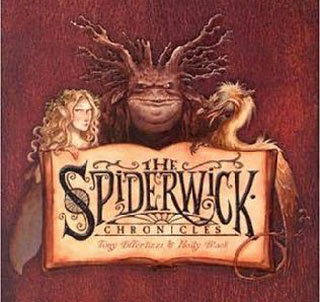
8. The Spiderwick Chronicles: The Field Guide by Black and De Terlizzi
I think this series really needs to be reviewed as a whole. I do love the cover, illusrations, and mood of the book, but this one just introduces you to the story, so it's hard to make a judgment. My daughter and I do look forward to reading each night (we're on to the second one now.)

7. The Ersatz Elevator by Lemony Snicket
One of my favorites so far of the Unfortunates. I suppose the usual conventions of Snicket could get old for more intelligent people than myself, but I found myself still highly amused with Book the Sixth, and very entertained by the narration of Tim Curry.

6. River Secrets by Shannon Hale
Companion to Hale's Goose Girl and Enna Burning, River Secrets tells the story of a young man who is surprisingly chosen to go on a diplomatic mission to his country's war-hungry neighbor. He is a lovable character, and it is exciting to see how he discovers his strengths and his value to society. I love her lyrical and uplifting writing.

5. Enna Burning by Shannon Hale
Enna develops a power that threatens to overwhelm her as the kingdom of Bayern wars with Tira. She has the power to conquer the enemy, but what will it cost her? Great story, great writing. I loved it. I would definitely identify myself as a Shannon Hale fan!

4. Fast-Food Nation by Eric Schlosser
Fascinating. Eye-opening. Informative. Shows what that regular trip through the drive-through may be costing our society, and exposes the dangers in the meat-packing industry that may make you not want to eat beef again (that only lasted a few days for me, but I'm not that big of a meat-eater anyways.) I suffered from an E. Coli-phobia for about a week after reading this, but I think I'm over it now. After criticizing several fast-food chains, the author basically gave the thumbs up to In'n'Out. What a relief--I don't think I could give that up!

3. Atonement by Ian McEwan
Brilliant! The only reason I didn't put this at number one is because it was a bit darker and heavier than my top two (both warm and fuzzy YA books) and this was a tough month in which I needed comfort more than a delving into the darker aspects of humanity. The basic plot of Atonement is rather simple, but it is McEwan's writing and what he makes of the story that makes it a masterpiece. I haven't seen the movie, but I have to think that the power of the book would be completely lost on the big screen.

2. The Thief Lord by Cornelia Funke
I'm a bit compulsive about reading things in order, so I felt I had to read this before reading Inkheart by Funke, since it was written first even though they are two unrelated stories. I am glad that I did. I can't really put my finger on what I loved about it, but one review I read on Amazon said that this was like a Dicken's story in a Venetian setting, and I love Dickens so maybe that explains it. (I think that was like a run-on sentence but I'm tired so I don't care.) The end didn't wrap up the way I imagined, but it didn't ruin the book for me. Inkheart here I come! I may have stumbled upon a new favorite author.

1. Book of a Thousand Days by Shannon Hale
My only complaint about this book: it's the last one of Hale's and I've read them all now! She better get writing! I read that she is doing a graphic novel about Rapunzel next, but I don't know if I will like that or not. Like Goose Girl, Book of a Thousand Days is based on a little-know fairy tale. It is presented in journal form, written by Dashti, the handmaid of a lady who is locked in a tower as punishment for not marrying an evil man. The two manage to escape from the tower as they also break free from the roles society has placed them in. It's feel-good reading with just the right amount of depth and complexity to keep it from being average. Highly recommended.

Well, this took my three days to finish, so I'm not even going to check for errors. Feel free to point any out in the comments.

Sunday, August 3, 2008

Shelley's Top Ten List of Books Recently Read

Or in other words, a way to get several procrastinated reviews out of the way. I'm way behind, I think because my kids have been out of school and they tend to hog the computer. I would say it was because I haven't had much time--things have been rather busy, but I had time to read the books, didn't I?
Here they are, counting down from worst to best:

10. The Historian by Elizabeth Kostova
Never have I been so relieved to hear the words, "This audio book has been a production of. . ."
This story about a hunt for Dracula spanning a few generations dragged on and on.

9. The Miserable Mill by Lemony Snicket
This is the fourth in the Series of Unfortunate Events, and it is the first that I didn't really like. The Baudelaire Orphans end up as workers in a lumber mill, with the usual despicable characters and tragic events, but the misery was not tempered with enough of the usual wit.

8. Death Comes for the Archbishop by Willa Cather
My Antonia is one of my favorite books, so I was excited to finally read this one by Cather. It first caught my attention when we went on a road trip to Albuquerque, NM, and we visited many places that are mentioned in this historical novel about two priests and their efforts to teach the native population of the Southwest. I think if I hadn't had my memories of visiting Santa Fe, Acoma, and other sites in the area, I would have been completely and utterly bored. I would only suggest it to someone to read as they are visiting the area to give them a feel for the history of the area.

7. Sons and Lovers by D. H. Lawrence
Oedipal. Depressing. Ho-hum writing style. Plot: Man loves mother, relationships with other women don't work, even when mother dies. (This is so much easier to just write words rather than sentences. Maybe I have a new format for my blog!) I don't regret reading it though--I like to have a least a taste of any author's work.

6. Running with the Demon by Terry Brooks
I am a fan of Brooks, and plan to read all of his books, but under any other circumstances I would have passed this book by based on the title and cover. It just doesn't sound like my kind of thing. But the book was okay. Brooks brings his usual themes of good and evil to present-day Illinois, with a fourteen-year-old heroine named Nest.

5. The Austere Academy by Lemony Snicket
The Baudelaire orphans meet new friends in this one! Of course something bad happens to them, but I was still so happy for Violet, Klaus and Sonny!

4. My Sister's Keeper by Jodi Picoult
I have heard such glowing reviews of Picoult's books I was excited to read this one by her for our church book club. While I found some of the language distracting, it was a powerful story about a girl who was conceived to be a donor match for her older sister, who has a rare and deadly form of leukemia. All in all I enjoyed it, but there were parts that I found unbelievable or too coincidental.

3. The Devil in the White City by Erik Larson
Creepy but fascinating. This creative-non-fiction novel alternately describes the planning and construction of the 1893 Chicago World's Fair and the life of the serial killer H. H. Holmes who took advantage of the events to commit fraud and murder.

2. The Absolutely True Diary of a Part-Time Indian by Sherman Alexie
I loved this book. It has bad language, references to sex, crude humor (imagine what a candid fourteen-year-old boy would write about). But it was so entertaining and uplifting for me. I laughed, I cried, it moved me.

And the number one book I read is:

1. Alias Grace by Margaret Atwood
There was so much in this novel to discuss I wouldn't know where to begin (or more likely, where to end.) This was the selection for a book club I hosted, and there was so much to talk about. The story in and of itself is good (Grace Marks is accused of helping to murder her employer and housekeeper, and spends years in jail. Dr. Simon Jordan spends time with her, trying to get her to remember the events of the murder, which she seems to have forgotten) , but looking deeper it is rich in symbolism and Freudian psychology. I lover her writing, she could probably write a paragraph describing this desk that I'm sitting at and I would read and reread it just enjoying the way she arranges the words.

I have more busy times coming up, so I'm going to start doing just one post at the end of each month of the books I've read that month. So check back at the end of August! Happy blogging!

Friday, August 1, 2008

When Organizing Isn't Enough by Julie Morgenstern

When I was offered a copy of When Organizing Isn't Enough to review, my first thought was, "What??!! Organizing is not enough?? What about my visions of a zen-like existence in my perfectly categorized home? My dream of an uber-efficient schedule of chores, meals, and self-enrichment??" But, alas, there is no need to reject my revered organizing tomes--this self-help book goes into a deeper, different direction rather than chucking all aims at organization.

The book is geared towards people who are at a transition in their life, and advises them how to "SHED" the physical and mental vestiges of their "old" life, so that all of their energies can be devoted to their new life direction. This applies a bit to me right now as I will have my youngest in first grade, and for the first time in 14 years, will have substantial blocks of time on some days of the week during some months of the year (I have four kids going to four different schools, and they will be on three different tracks--one traditional, two on a regular year-round, and one on a crazy single track. Oh, the joys of my SoCal school district!) How do I decide what I will do with my time? Morgenstern encourages readers to pick a "theme" as a guide to navigating new territory (Covey's "mission statement" meets Ally McBeal's "theme song" is what my mind conjures up). I must confess that I have not come up with a theme yet, but I have been thinking a lot about it, and the author give many examples of possible themes (embracing my power, discovery, creating nurturing home, etc.)

Once you pick your theme, you move on the the SHED fase. I am a little wary of acronyms--worried that content is sacrificed or embelished for the sake of fitting into a clever abbreviation. But Morgenstern does a good job of making each letter of SHED valid. The bulk of the book is devoted to the process of SHEDding:

S-Separate the treasures--What is truly worth hanging on to?
H-Heave the trash--What's weighing you down?
E-Embrace your identity--Who are you without all your stuff?
D-Drive yourself forward--Which direction connnects you to your genuine self?

I have not yet done all of the exercises recommended--I've gotta pick that darn theme!--but I suspect that when I do, if nothing else, I will be more aware of what makes me tick, and what direction I want to take as my kids get older (other than in the direction of the lunatic asylum as the teenage years come upon me). And hopefully, whatever new roads I decide to take, that uber-organized home will be there to return to!

Here's a video of the author explaining the idea of the process of SHED, and how it has applied to her life: